_edited.png)
Featured Case Study:
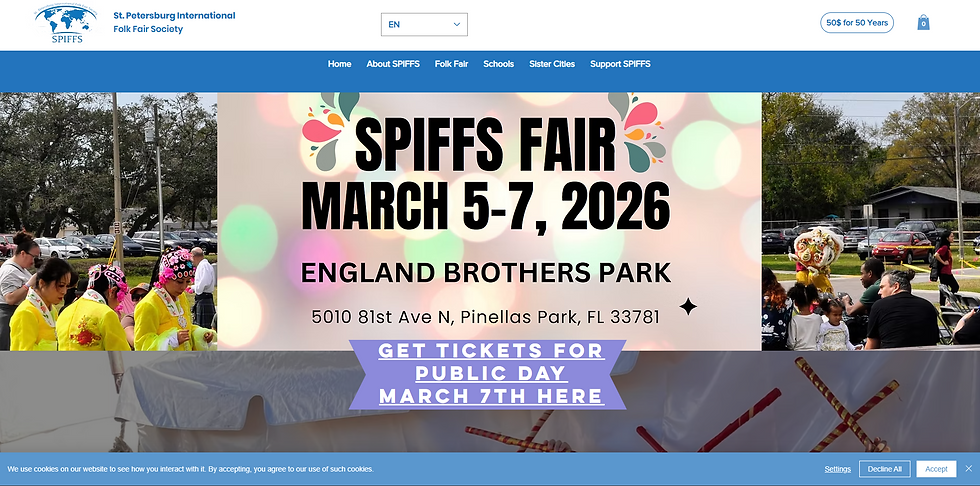
St. Pete International Folk Fair (SPIFFs)
Supporting large-scale cultural events through systems-led digital infrastructure
SPIFFS supports one of the region’s largest cultural festivals, drawing significant public traffic and participation—particularly during peak event seasons.
As attendance and interest grew, SPIFFS needed more than a visually updated website. They needed systems that could handle increased demand, improve information flow, and support multiple stakeholder groups, including schools, educators, and event participants.

The Challenge
Before the rebuild, SPIFFS faced several operational challenges:
-
Increased website traffic during festival season without supporting infrastructure
-
School and program forms hosted as static PDFs, creating friction and inefficiency
-
Manual handling of submissions and registrations
-
Limited automation to ensure information reached the correct internal teams
The digital experience existed—but it wasn’t designed to support scale or operations.
The Strategy
We focused on function first, designing systems that could support real-world use cases during high-demand periods.
Key priorities included:
-
Improving access during peak traffic periods
-
Converting static PDFs into accessible, embedded digital forms
-
Creating structured workflows for schools and program participants
-
Automating internal routing to ensure submissions reached the correct stakeholders
.png)
The Solution
Key improvements included:
-
A redesigned homepage with a video welcome to immediately connect visitors to the church community
-
Simplified navigation and clearer calls to action
-
Dedicated flows for online donations and volunteer engagement
-
A fully optimized mobile experience
-
Visual design aligned with the church’s branding and values
The result was a site that felt modern, welcoming, and easy to navigate — without overwhelming users.
The Results
After launch, the church saw measurable improvements in engagement and usability:
48% increase in online donations
32% increase in volunteer applications
27% lower bounce rate, indicating stronger visitor engagement
More importantly, the website began functioning as a true extension of the church’s mission — not just an online brochure.

Why This Worked
This project succeeded because it prioritized systems, accessibility, and operational clarity over surface-level design.
When digital infrastructure supports real workflows:
-
Organizations scale more effectively
-
Stakeholders get the information they need
-
Internal teams operate with less friction
