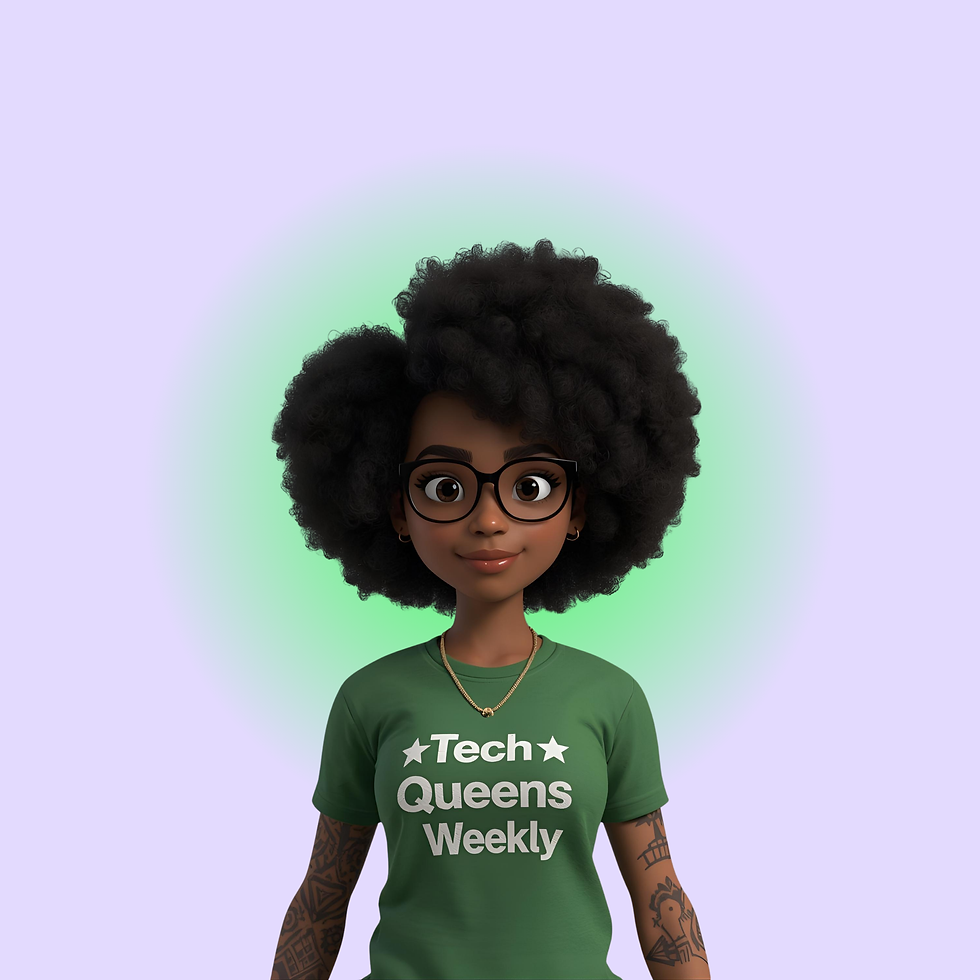
I’mTaylor Smith- web designer, strategist, and founder passionate about helpingBlack women break into tech, explore AI, and launch their own startups.
Over the past10+ years, I’ve helped purpose-driven entrepreneurs and nonprofits build scalable digital brands, high-converting websites, and impactful online experiences. Now, I’m here to share insights, tools, and inspiration to helpyou claim your space in tech.
Why Tech Needs You
Black women make up less than 3% of the tech workforce - the industry needs your perspective, creativity, and leadership.
AI, web development, and digital innovation are reshaping careers - there’s never been a better time to start or pivot into tech.
Tech isn’t just about coding - it’s about solving problems, creating impact, and building financial independence.
What to Expect from This Newsletter:
Weekly insights into tech, AI, and entrepreneurship
Actionable tips to grow your skills and confidence
Spotlight stories of inspiring Black women making waves in tech
Resources to help you start side hustles, launch startups, and thrive in digital careers
This isyour space to learn, grow, and connect. Whether you’re taking your first steps into tech or scaling your own venture,Tech Queens Weeklyis here toguide, motivate, and celebrate your journey.
Here’s to building, creating, and thriving together.
Let’s get Techy!Follow along every week for practical tips, resources, and stories that empower you to make your mark in tech.
Let’s start by getting to know each other 👑Where are you joining from, and what’s drawing you to tech right now?
So you’ve decided you’re ready to step into tech — but where do you start? Let’s be honest: breaking into tech can feel overwhelming, especially when you’re coming from a different industry or don’t have a traditional computer science background. But here’s the truth:there’s a place for you in tech, and plenty of high-growth roles that don’t require years of coding experience to get started.
Today, we’re breaking downentry-level tech rolesthat are in demand, pay well, and offer clear paths to growth.
💻 1. Web Developer / Front-End Developer
If you enjoy design, creativity, and bringing ideas to life visually — this could be your lane. You’ll work on building websites and apps that look goodandfunction smoothly.
Why it’s great:
Growing demand across industries
Freelance + remote opportunities
Strong pathway to senior developer or UX roles
Start learning:
HTML, CSS, JavaScript
FreeCodeCamp, Scrimba, or SheCodes
🤖 2. Data Analyst
If you love problem-solving and storytelling with numbers, data analytics is one of the best ways to get into tech.
Why it’s great:
Data is everywhere — from healthcare to marketing
Entry-level roles can lead to data science or AI careers
Average U.S. salary: $65K–$85K+
Start learning:
Excel, SQL, and Python basics
Google Data Analytics Certificate (Coursera)
🧠 3. AI / Machine Learning Assistant Roles
You don’t have to be a “tech genius” to work with AI. Many startups and companies are hiring AI research assistants, prompt engineers, and model trainers.
Why it’s great:
Fast-growing field with endless innovation
Builds your foundation in AI and automation
Opportunities to specialize later in machine learning, AI ethics, or automation strategy
If you’re organized, love strategy, and can lead a team — product management could be your superpower.
Why it’s great:
You get to shape the direction of tech products
Excellent salaries + leadership growth potential
Great for people from marketing, education, or business backgrounds
Start learning:
Learn UX fundamentals
Take a Product Management intro course (Reforge, Product School)
🌐 5. UX/UI Designer
If you love creativity, psychology, and design, this is a beautiful blend of art and tech.
Why it’s great:
Growing demand in startups and nonprofits
Remote-friendly and project-based opportunities
Bridges design, storytelling, and tech
Start learning:
Figma, Adobe XD, Canva Pro
Google UX Design Certificate or DesignLab
💬 My Advice: Start Where You Are
You don’t have to have it all figured out. Pick one role that excites you, explore what it takes to grow in that space, and start building small projects that strengthen your skills and confidence. Every line of code, every design, every dataset you explore — it’s all shaping your future.
But beyond learning thehard skills, remember this: tech changes fast. The real key to success is stayingcurious, flexible, and committed to lifelong learning.
Learn how to think critically, ask better questions, andprompt creatively— because in the age of AI, the quality of your thinking is just as important as the tools you use. Be open to experimenting with new platforms, understanding data, and collaborating with AI-savvy teammates. The more you explore, the more confident and strategic you’ll become.
And as you grow, keep yourhuman ethics and storytellingat the center of everything you do. Technology should amplify our values, not replace them. AI is not your competitor — it’s yourpartnerin innovation, creativity, and problem-solving.
Not every role will be your forever fit, and that’s okay. Each experience adds depth, clarity, and passion to your journey. The goal isn’t perfection — it’sprogress, purpose, and growth.
✨ Queen’s Challenge of the Week
Researchone of the roles abovethat sparks your interest.
Find one person on LinkedIn in that field
Read one beginner-friendly guide or watch a YouTube tutorial
Write down what excites you most about that career
Tag me or share your progress using#TechQueensWeekly— I’d love to celebrate your first steps! 👑
Let’s talk, Queens 👇🏾Which role on this list caught your eye first—and why?
You belong here.The tech world needs your creativity, your voice, and your vision. Let’s keep learning, growing, and taking up space — together. 💪🏾
When it comes to growing your nonprofit’s impact, understanding how donors interact with your organization is everything. Imagine being able to walk in your donor’s shoes, seeing exactly what they see, feeling what they feel, and knowing what moves them to give. That’s the magic of donor journey strategies. And at the heart of it all? Online donor journey mapping.
This isn’t just a fancy buzzword. It’s a powerful tool that can transform how you connect with supporters, boost donations, and build lasting relationships. Ready to dive in? Let’s explore how you can harness this approach to elevate your mission and create real-world impact.
Why Donor Journey Strategies Matter More Than Ever
Donors today are savvy. They want to feel connected, understood, and appreciated. They don’t just want to give money; they want to be part of a story, a movement, a cause that resonates deeply with their values.
That’s where donor journey strategies come in. By mapping out the entire experience—from the moment someone first hears about your cause to becoming a loyal supporter—you can tailor every interaction to meet their needs and expectations.
Here’s why this matters:
Personalized Engagement: When you know your donor’s path, you can send the right message at the right time.
Increased Retention: Happy donors stick around. They give more and tell their friends.
Clearer Insights: Understanding the journey highlights what’s working and what’s not.
Stronger Relationships: It’s not just about transactions; it’s about trust and connection.
Think of it like planning a road trip. You wouldn’t just jump in the car without a map or GPS. You’d want to know the best routes, stops, and sights along the way. Donor journey strategies give you that map for your fundraising efforts.
Team planning donor journey strategies
Building Effective Donor Journey Strategies: Step-by-Step
Let’s get practical. How do you build donor journey strategies that actually work? Here’s a straightforward roadmap:
1. Identify Your Donor Personas
Start by understanding who your donors are. Segment them by demographics, motivations, giving history, and communication preferences. For example:
First-time donors who need education about your mission.
Recurring donors who want updates on impact.
Major donors who expect personalized outreach.
2. Map Out Key Touchpoints
List every interaction a donor might have with your organization, such as:
Discovering your website or social media.
Signing up for a newsletter.
Attending an event.
Making a donation.
Receiving a thank-you message.
Getting impact reports.
3. Analyze Donor Behavior and Emotions
At each touchpoint, ask:
What is the donor thinking or feeling?
What questions or concerns might they have?
What action do you want them to take next?
4. Create Tailored Content and Experiences
Use your insights to craft messages and experiences that resonate. For example:
A warm welcome email for new subscribers.
A heartfelt thank-you video for first-time donors.
Exclusive updates for recurring supporters.
5. Test, Measure, and Optimize
Donor journey strategies aren’t set-it-and-forget-it. Use analytics and feedback to see what’s working. Adjust your approach to improve engagement and conversion rates.
By following these steps, you’ll create a seamless, donor-centric experience that feels natural and compelling.
Now, here’s where things get exciting. The digital world offers incredible tools to visualize and optimize your donor journey. Online donor journey mapping lets you track every click, scroll, and interaction your supporters have with your online presence.
Why is this a game-changer?
Real-Time Data: See how donors move through your website and campaigns.
Identify Drop-Off Points: Find where donors lose interest or get stuck.
Personalize Outreach: Use data to send targeted messages based on behavior.
Improve User Experience: Make your website and donation process smoother.
Imagine you notice many visitors leave your donation page before completing their gift. With online donor journey mapping, you can dig into why that happens. Maybe the form is too long, or the call to action isn’t clear. Fixing these issues can dramatically increase donations.
Donor journey analytics dashboard on computer screen
Real-Life Examples: Donor Journey Strategies in Action
Let’s bring this to life with some examples that show how donor journey strategies can transform fundraising.
Example 1: The Welcome Series That Converts
A community organization noticed many new website visitors signed up for their newsletter but didn’t donate. They created a welcome email series that:
Shared their mission story.
Highlighted recent successes.
Included a simple, heartfelt ask.
Result? A 30% increase in first-time donations within three months.
Example 2: Personalized Impact Reports
A nonprofit serving children sent generic annual reports to all donors. After mapping their donor journey, they segmented supporters by giving level and interest. They then sent personalized impact reports with stories and photos relevant to each donor’s focus area.
Result? Donor retention improved by 25%, and recurring gifts increased.
Example 3: Streamlined Donation Process
An environmental group used online donor journey mapping to analyze their donation funnel. They discovered the multi-page form was causing drop-offs. They simplified it to a single page with fewer fields and added a progress bar.
Result? Donation completion rates jumped by 40%.
These stories prove that when you understand your donors’ journey, you can create strategies that truly resonate and drive results.
Taking Action: How to Start Mapping Your Donor Journey Today
Feeling inspired? Here’s how you can get started right now:
Gather Your Team: Bring together marketing, fundraising, and program staff to share insights.
Collect Data: Use surveys, interviews, and website analytics to understand donor behavior.
Create a Visual Map: Use tools like flowcharts or journey mapping software to plot touchpoints.
Identify Gaps and Opportunities: Look for moments where donors might feel confused or disconnected.
Develop Targeted Content: Craft messages and experiences tailored to each stage.
Implement and Monitor: Launch your strategy and track performance regularly.
Remember, this is a journey, not a one-time project. Keep refining your approach as you learn more about your donors.
Unlocking Long-Term Growth and Impact
At the end of the day, donor journey strategies are about building relationships that last. When you meet donors where they are, speak to their hearts, and make giving easy and rewarding, you create a foundation for sustainable growth.
The TTC Agency is here to help you clarify your strategy, build high-converting websites, and implement systems that support your mission for the long haul. Together, we can turn your vision into reality.
So, what’s your next step? Dive into your donor data, start mapping the journey, and watch your community grow stronger every day. Your mission deserves nothing less.
Ready to transform your fundraising? Let’s map your donor journey and unlock new possibilities!
_edited.png)